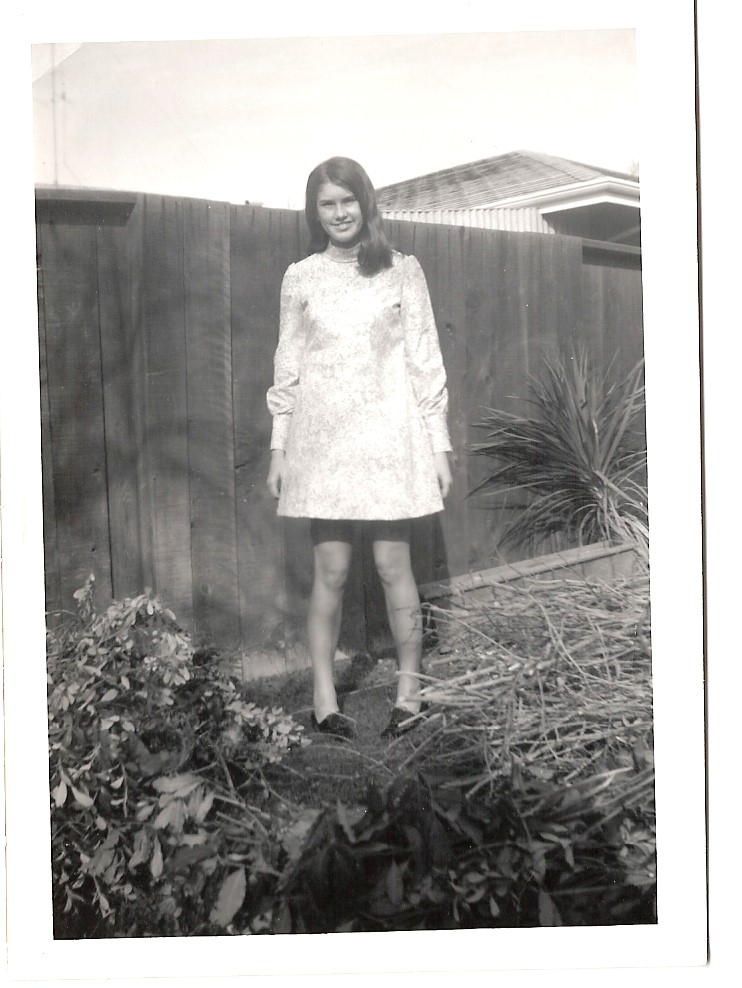
Naturally, I swore my close friends to secrecy which ensured the sordid truth spread quickly. Some people said I was stoned, drunk or dangerously disturbed. Oddly enough, many of them were the same people who used to say I was a dull, goody-two-shoes brain. Was it possible to be both?
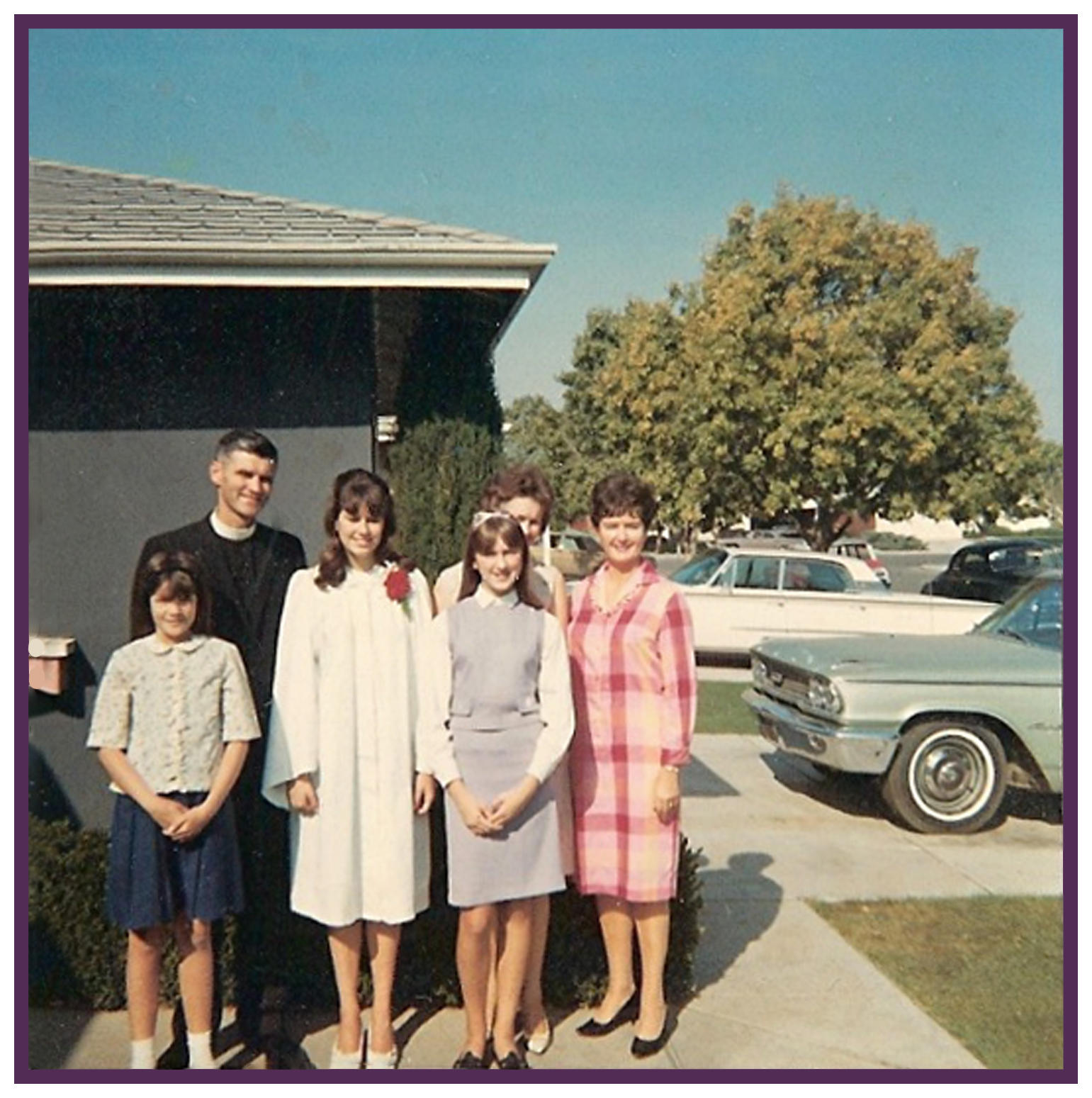
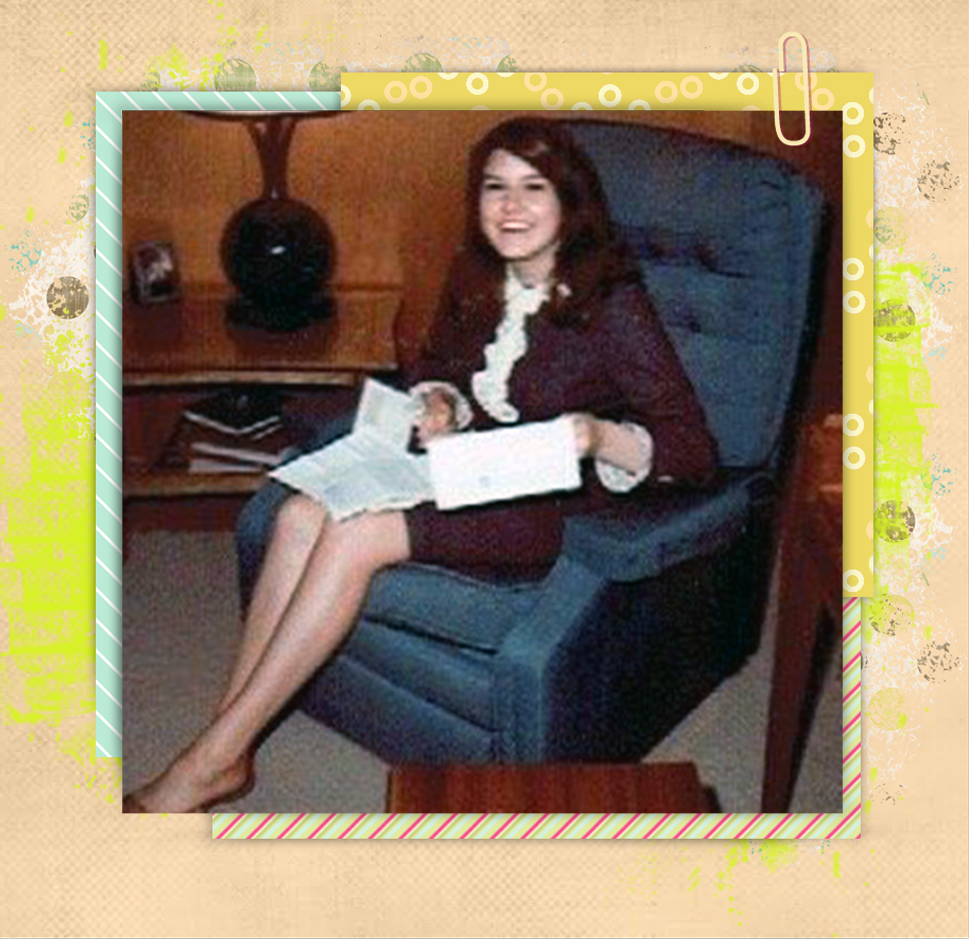
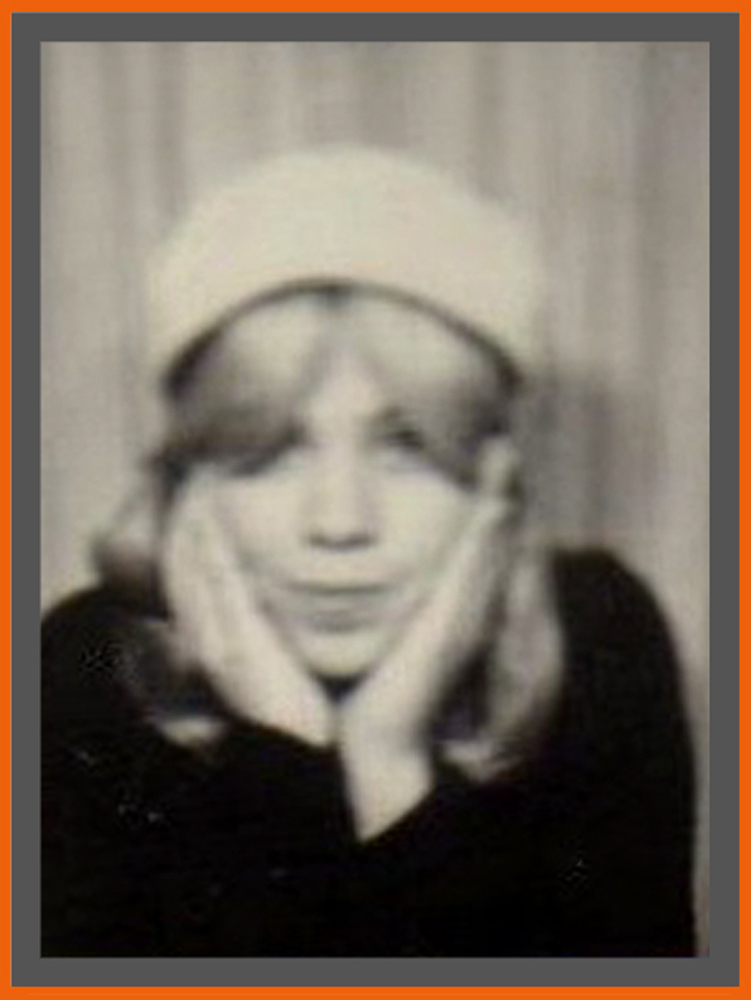
The goody-two-shoes preacher’s daughter Kathy (in confirmation white)
A preacher’s daughter is supposed to be a good example. I should’ve been getting A’s in summer school or reading great literature at home, not sitting in a police station signing a confession like some juvenile delinquent.
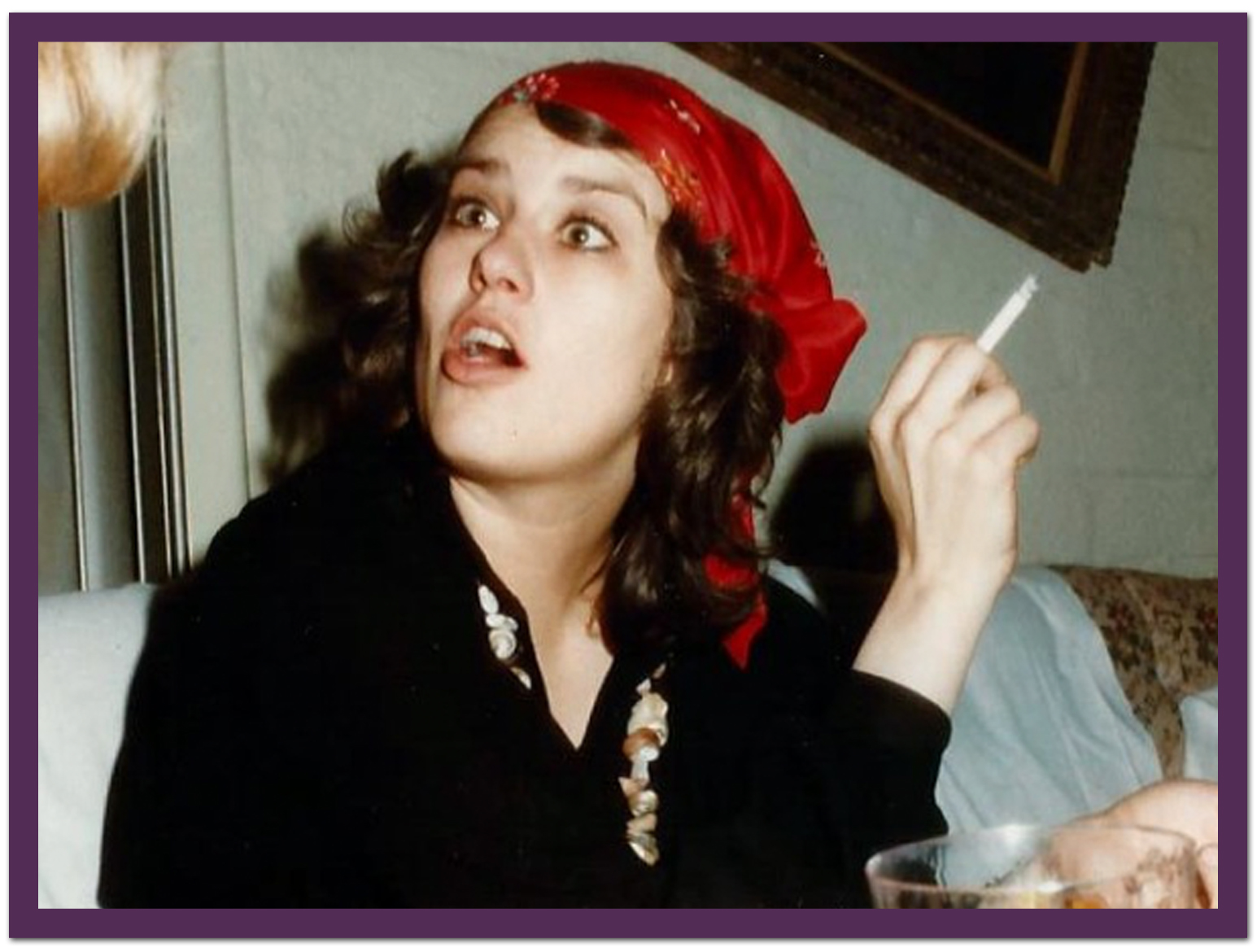
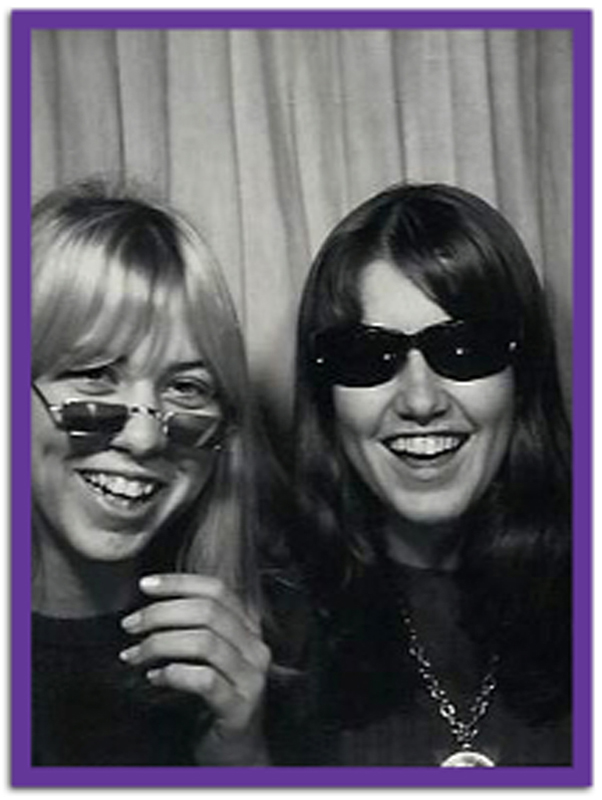
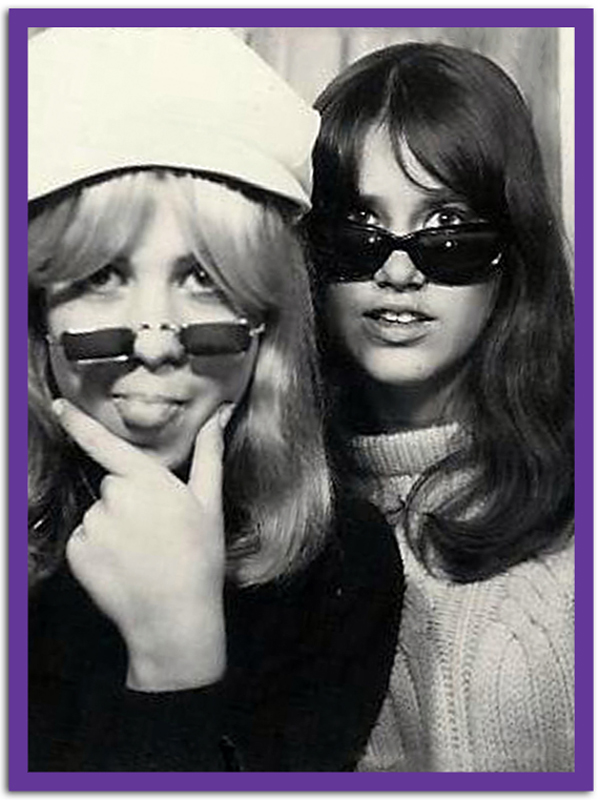
The smoking sociopathic lunatic Kathy who doesn’t know when to shut up, appropriately clothed in black.
Fifty years later, it’s safe to say I’m more the preacher’s daughter than I am a smooth criminal. But it would be a lie to say there isn’t a trace of the social misfit (I’m loathe to use the word sociopath) that I repress. It’s the part that seeks out gory true crime books in an attempt to learn why they do what they do as if by understanding the dark motivations in others, I might understand the dark corners in myself.
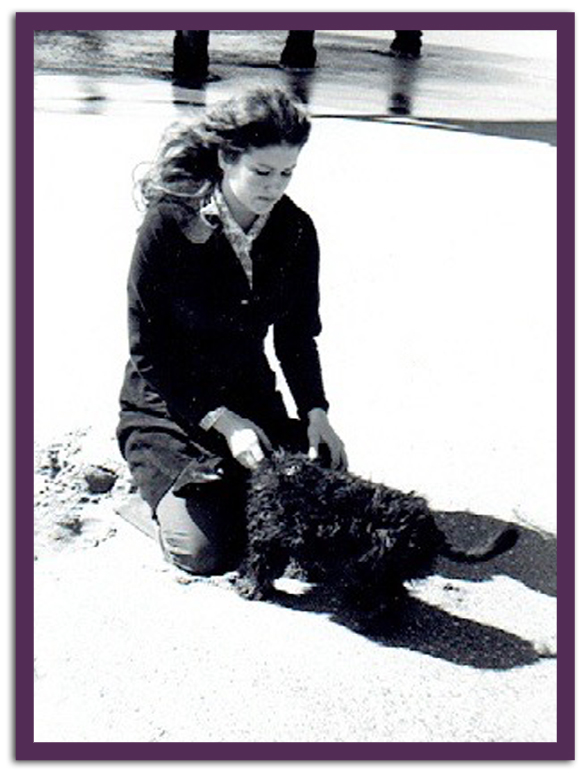
Is that my Shadow? Like I said, I don’t really know him that well.
Jung referred to this as the Shadow. A crucial part of the process of individuation is coming to terms with your Shadow. I’m still getting to know mine.
Less than ten days prior, I endured graduation from Wilcox High – so how did I wind up here?
Reading my acceptance letter to UCLA.
On a rainy Sunday afternoon, months after my acceptance as a fall English major at UCLA, I got bored and flipped through the UCLA Catalog of Courses. It changed the course of my life.
UCLA General Catalog – No Math – No Science – Sign me up!
That afternoon, in a burst of clarity, I realized that simply by switching my major to Film (College of Fine Arts as opposed to Bachelor Arts), I could jettison every single math and science class – for the rest of my life! And that was just the beginning, once I viewed college like an academic Chutes and Ladders. I didn’t have to land on boring chutes like Shakespeare (I confess, not a fan) and Milton – I could climb crazy ladders instead. In addition to a smorgasbord of fantastic film courses all I needed to win a degree was a few English department creative writing courses and my choice of esoteric lit classes.
First thing Monday morning, I was on the phone with the UCLA registrar to change my major from English (already sounding dreary) to Film Writing (until now, who knew that anybody actually wrote films? Not me, but it sounded more entertaining than Chaucer in the original Middle English.)
Disclaimer: Don’t bother making the same request today. For starters, you must be a junior to apply. Once a year, the Film Department admits 15 juniors from disciplines within UCLA and 15 juniors from outside institutions. To compete, you must submit a creative portfolio, envelopes stuffed with cash (that’s a JOKE) and pray. Sixty out of thousands of applicants are selected for an in-person on-campus interview. Thirty of them move on to become next year’s film majors.
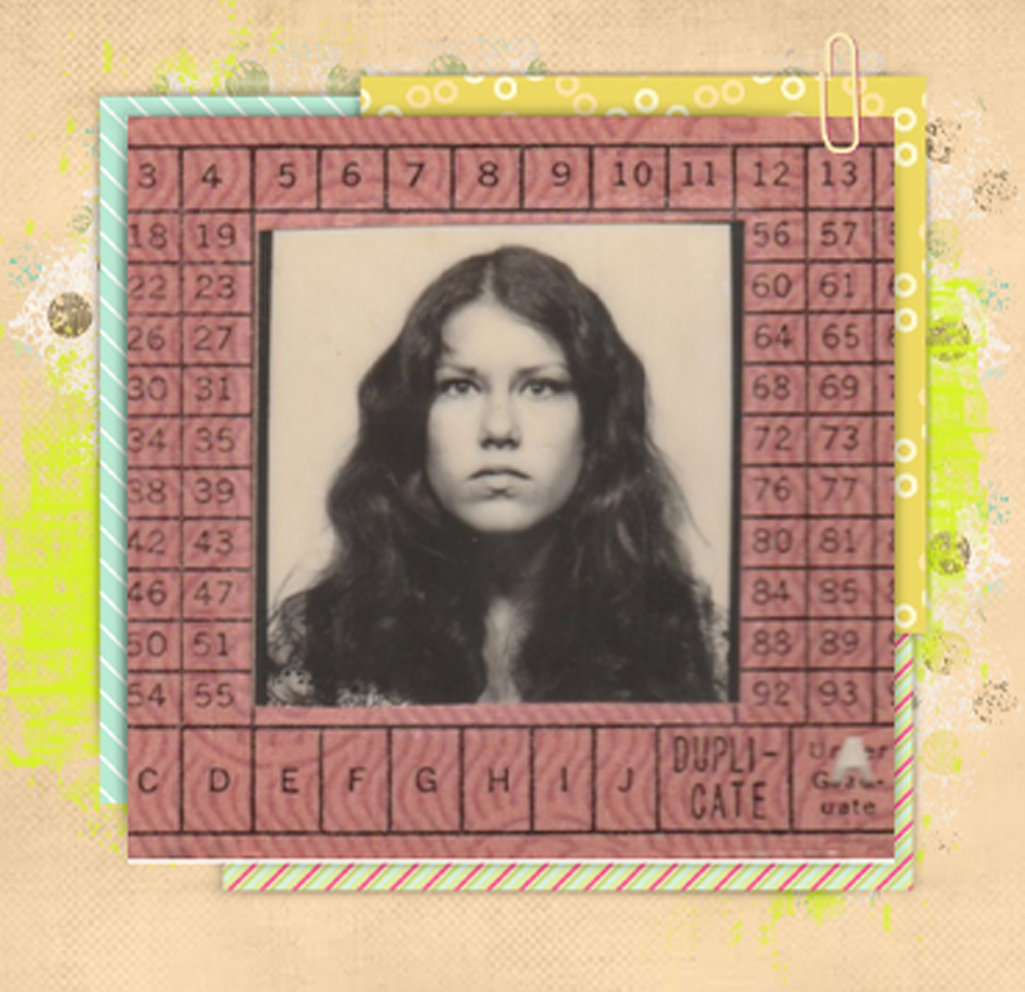
STUDENT ID CARD FRESHMAN YEAR (going for the popular Serial Killer look)
To be sure, it was not exactly a cake walk in 1969. The registrar said, “Here’s the thing, Miss Knutsen. You can do it if you start this summer instead of in the fall.”
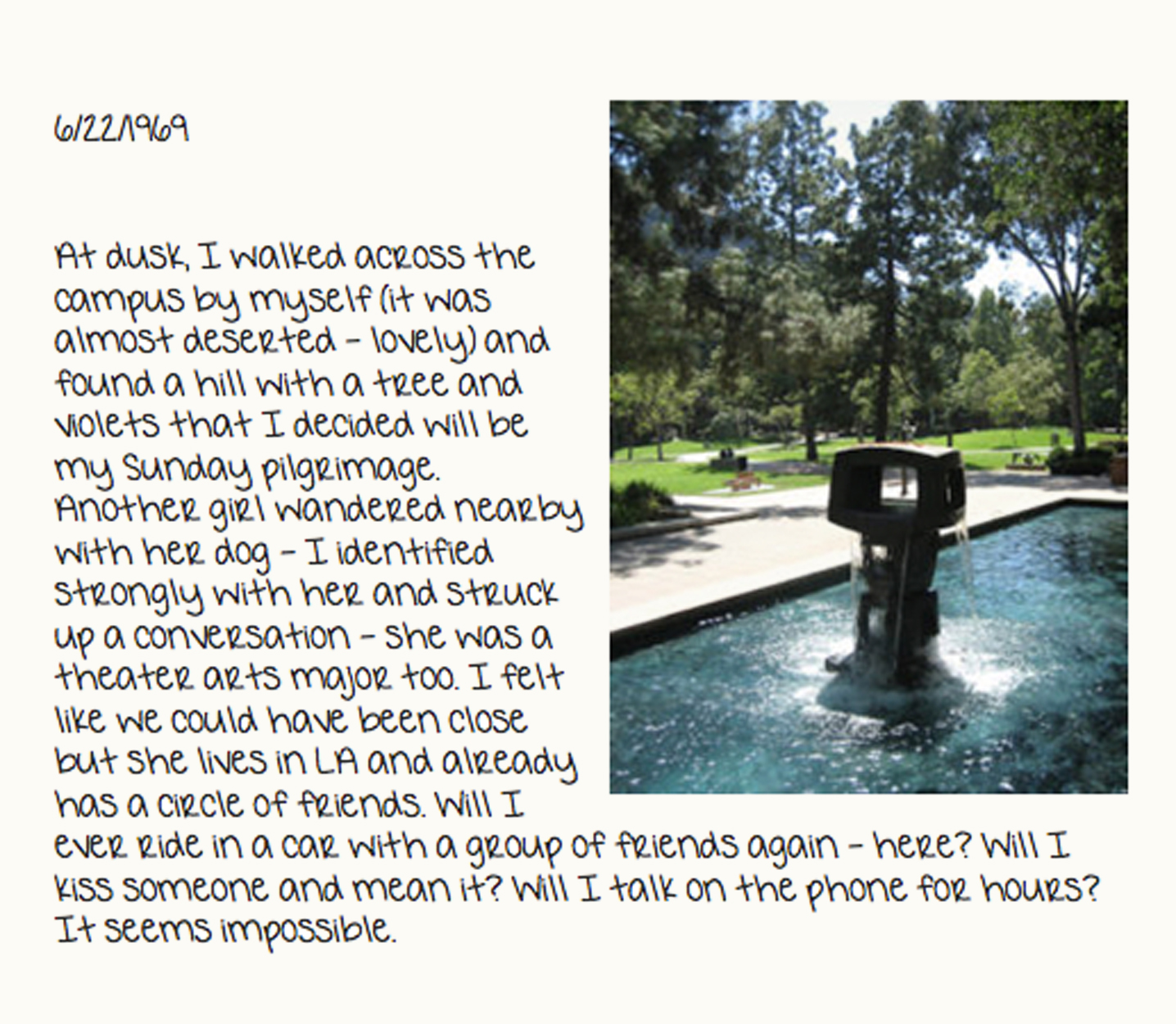
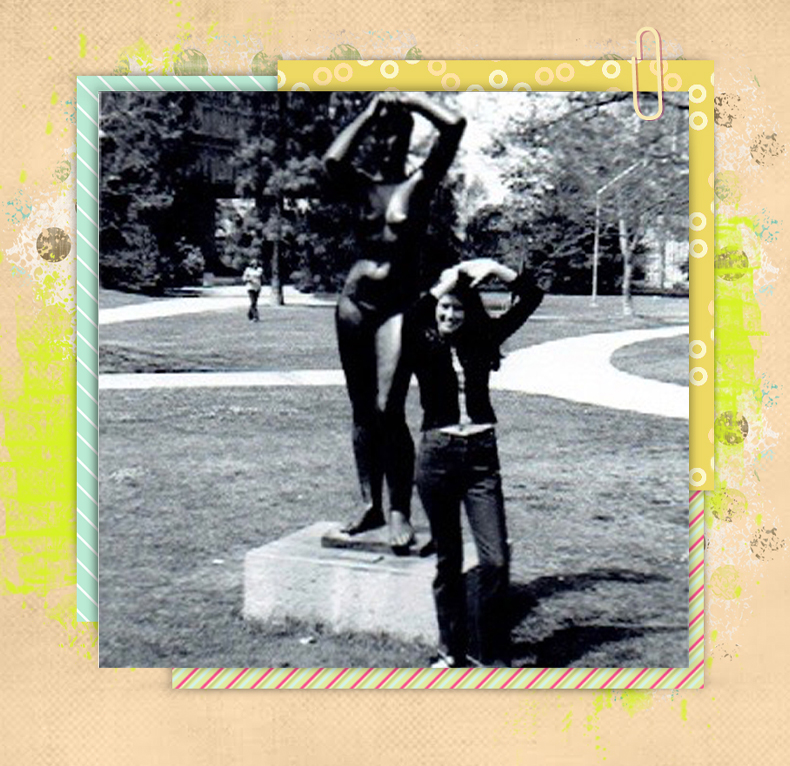
I relate to a sculpture in the wonderful Sculpture Gardens conveniently located in front of the Theater Arts and Art buildings.
This might have given me pause had I not been paralyzed by self-diagnosed severe clinical depression. With no rainbows on my horizon, what could I lose by sacrificing a final Santa Clara summer for a new start in LA?
So I said YES and it changed my life. Plunging into college that summer opened the door to a perfect career (for me) in a field I literally did not know existed until I noticed the difference in basic course requirements between English and Film. Was it serendipity, fate, luck or the hand of God? It depends on your point of view, I guess. All I know for sure is I wasn’t searching for my purpose or a path – but it was waiting for me to say yes and leap.
Cousin Connie at Janet’s left w/her two little sisters and my Grandma O
Here’s a tip for anyone asked to read a piece of creative writing by anyone else – a relative, friend, co-worker, neighbor. No matter how savagely the writer deprecates their own work, in their secret heart they believe it is a masterpiece. They don’t want your nit-picking notes, your criticism or your suggestions for cuts and improvements. As they see it, no improvement is possible. Every word is perfection precisely as placed. So why did they give it to you to read and ask for your “honest opinion?”
What they’re looking for is love, unconditional love and approval for their very existence. Anything less than a flood of admiration will, at best, fail to satisfy. You don’t want to be responsible for “daunting a dream,” do you? It was more than a little galling to be so cavalierly dismissed by a cousin at least two years younger.
Perhaps the need for validation is more pressing for amateur (unpublished or unproduced) writers. Professionals like myself have learned to suck it up, absorb a torrent of “notes” from well-meaning but clueless production executives and remain standing. No one survives in this business without a thick skin.
Who’s kidding who? Professionals yearn for love and approval every bit as intensely as my 6th grade self craved it from my cousin Connie. A little love and approval goes a long way.
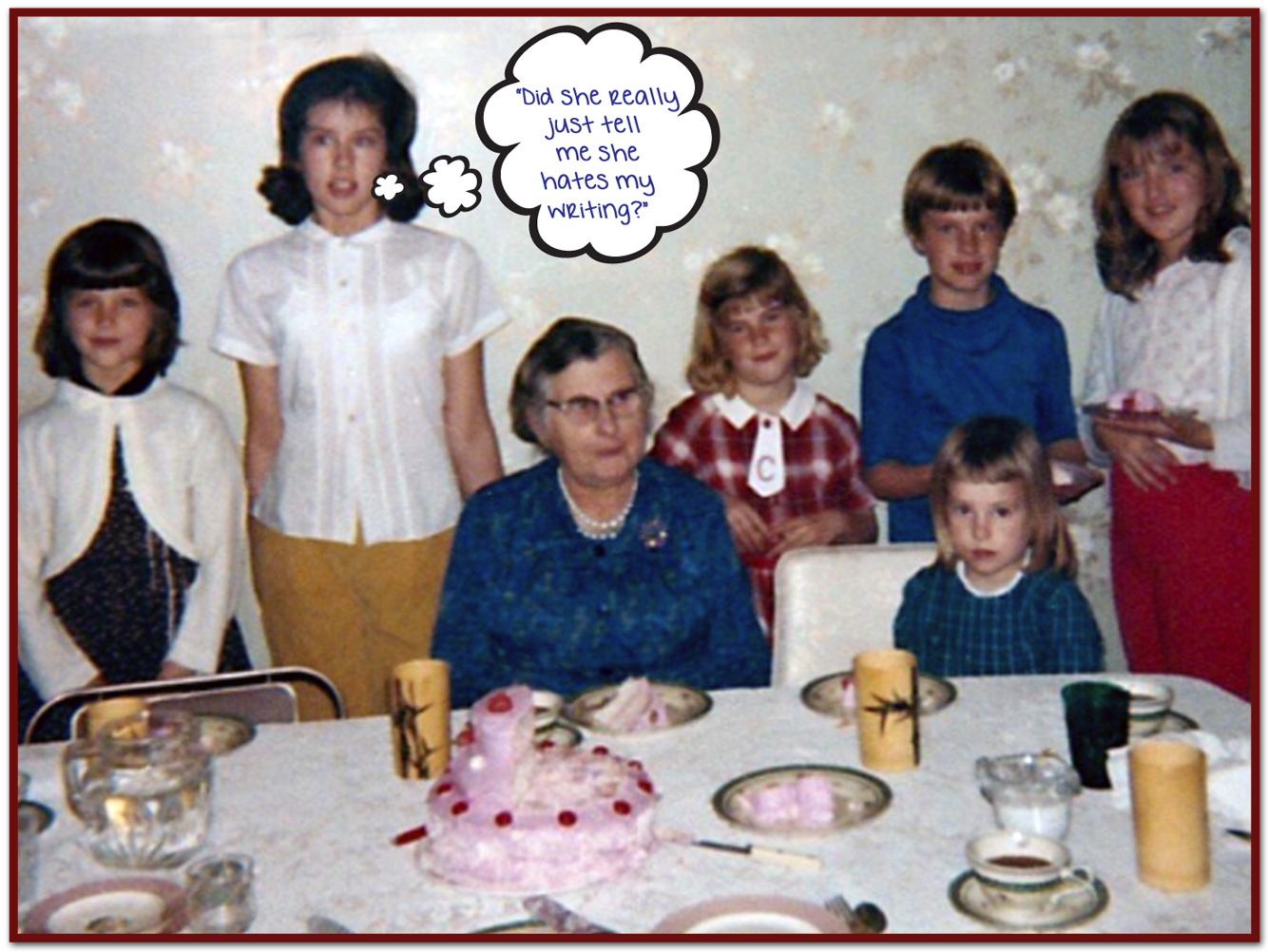
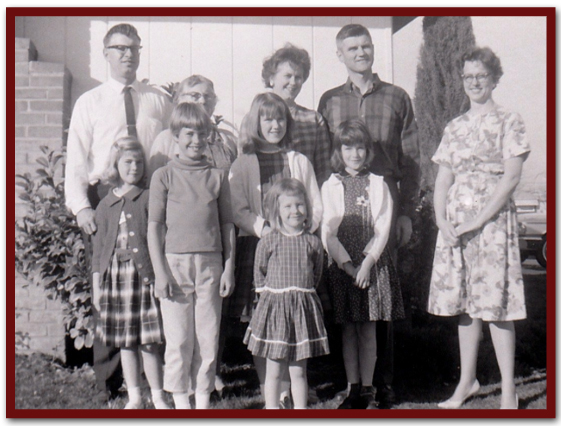
My family with Connie’s family except – where’s Kathy? Hiding and crying her eyes out, that’s where. Is it my imagination or does Connie sport a self-satisfied smirk?
Case in point. I did my best work – above and beyond the call of duty – for a producer who started every conversation with five minutes gushing about the brilliance of my last draft before easing into that minor matter of a few “tiny” fixes. His praise was so addictive, so intoxicating – and, at least for me, so unusual – I’d hurl myself into yet another unpaid rewrite just for another taste of the sweet stuff.
Just to be clear, I do not advocate manipulating writers. But Thumper’s mother got it right in Bambi – especially when dealing with the tender heart of an amateur. If you can’t say something nice, don’t say anything at all.
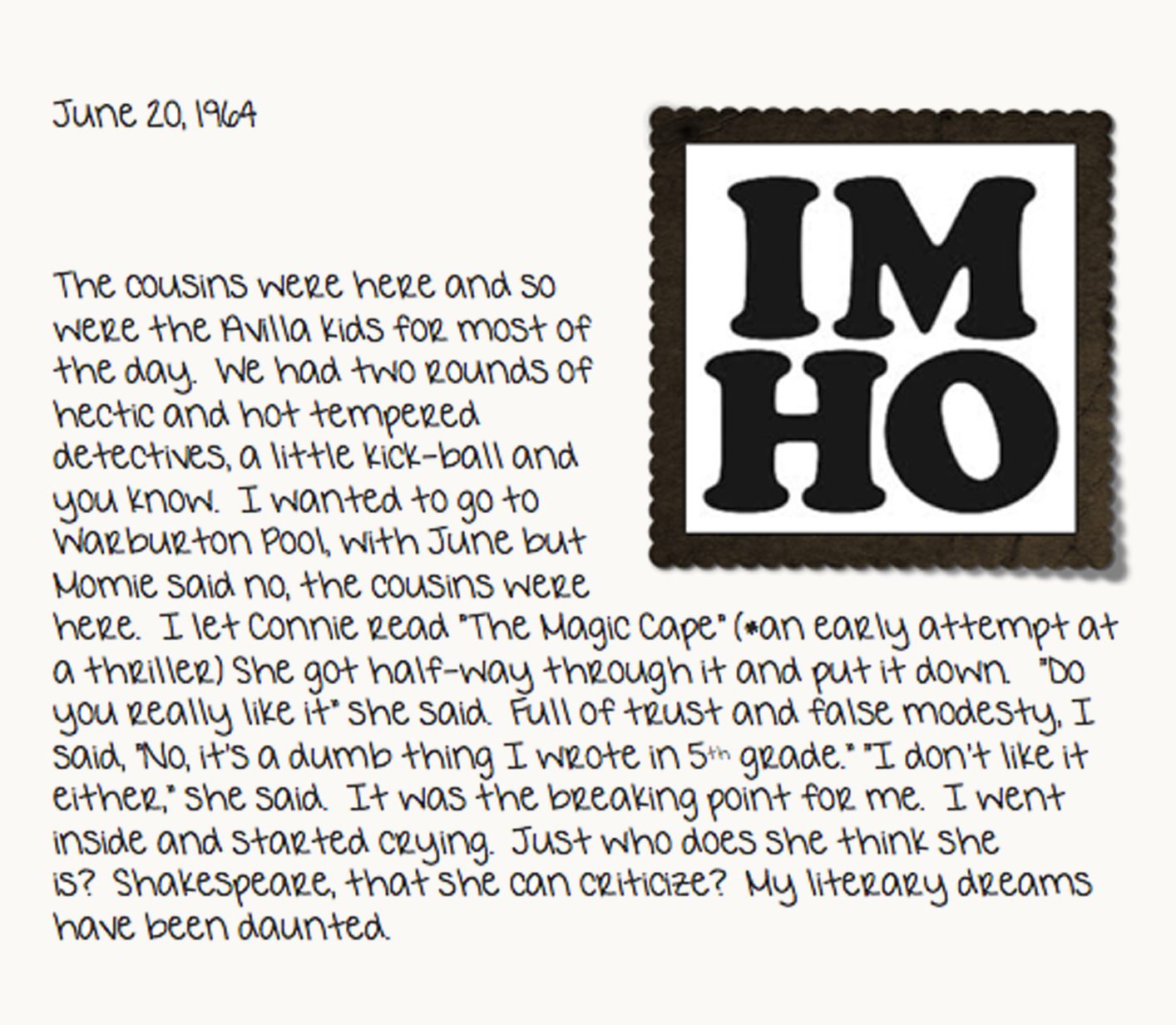
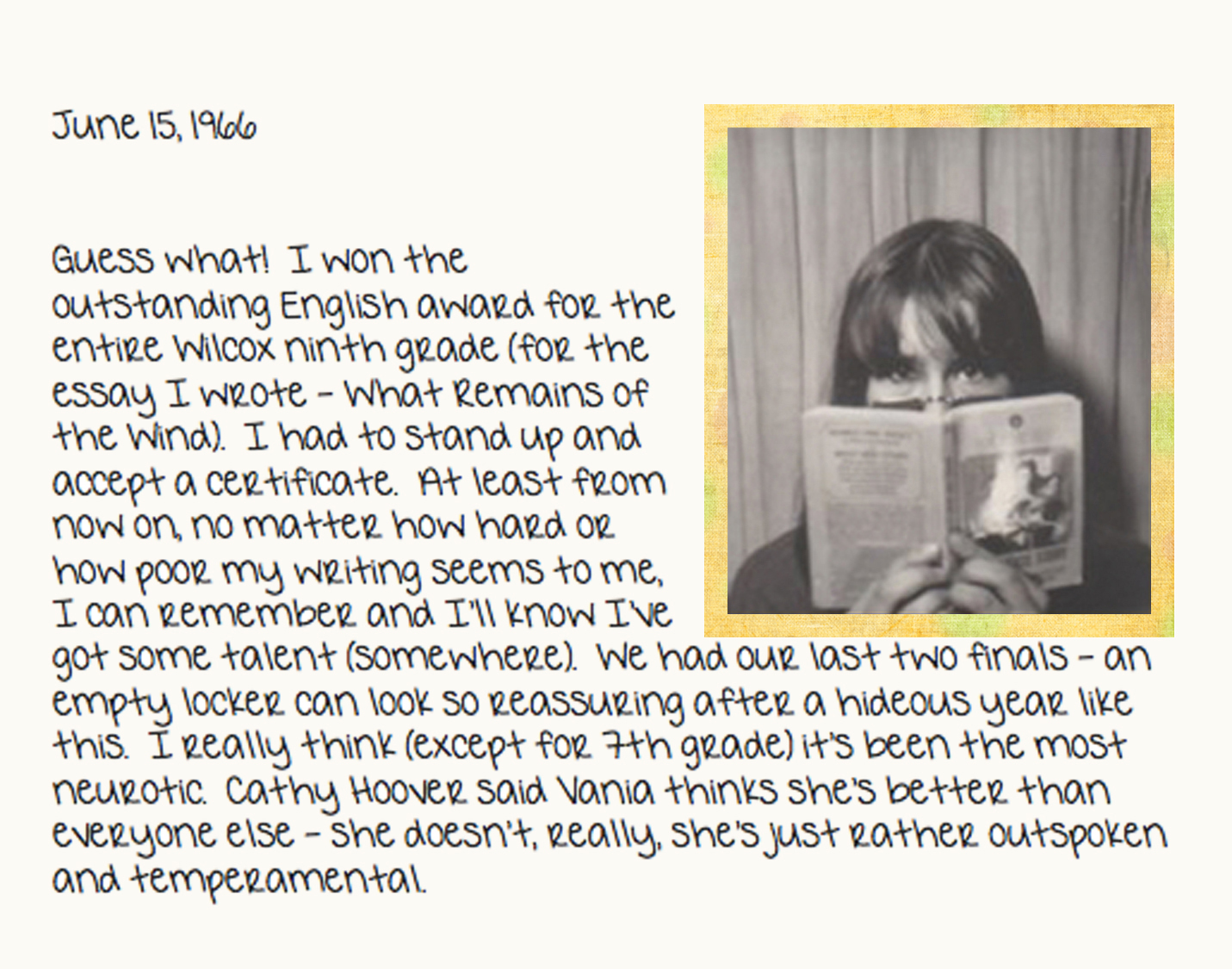
Was I an optimist or what? From the sound of this entry, I sincerely believed that merely winning the outstanding English student award in 9th grade would be enough to give me confidence when my faith in a writing career – always a risky endeavor at best – faltered. Even my father, possibly my staunchest advocate, regularly handed me clippings he just “happened to see” about expanding career opportunities in library science among other liberal arts fields besides creative writing. It’s not that he didn’t believe in me, he just thought it would be prudent to have a real job to fall back on. To his credit, he never pressured me to choose a more sensible major than film-writing but that’s another story.
Apparently, I believed the 7th grade and my freshman year of high school were the nadir of my existence. Little did I know that all the things that made me so “neurotic” and turned the year “hideous” were trivial beyond belief compared to some of the real life problems awaiting me down the line.
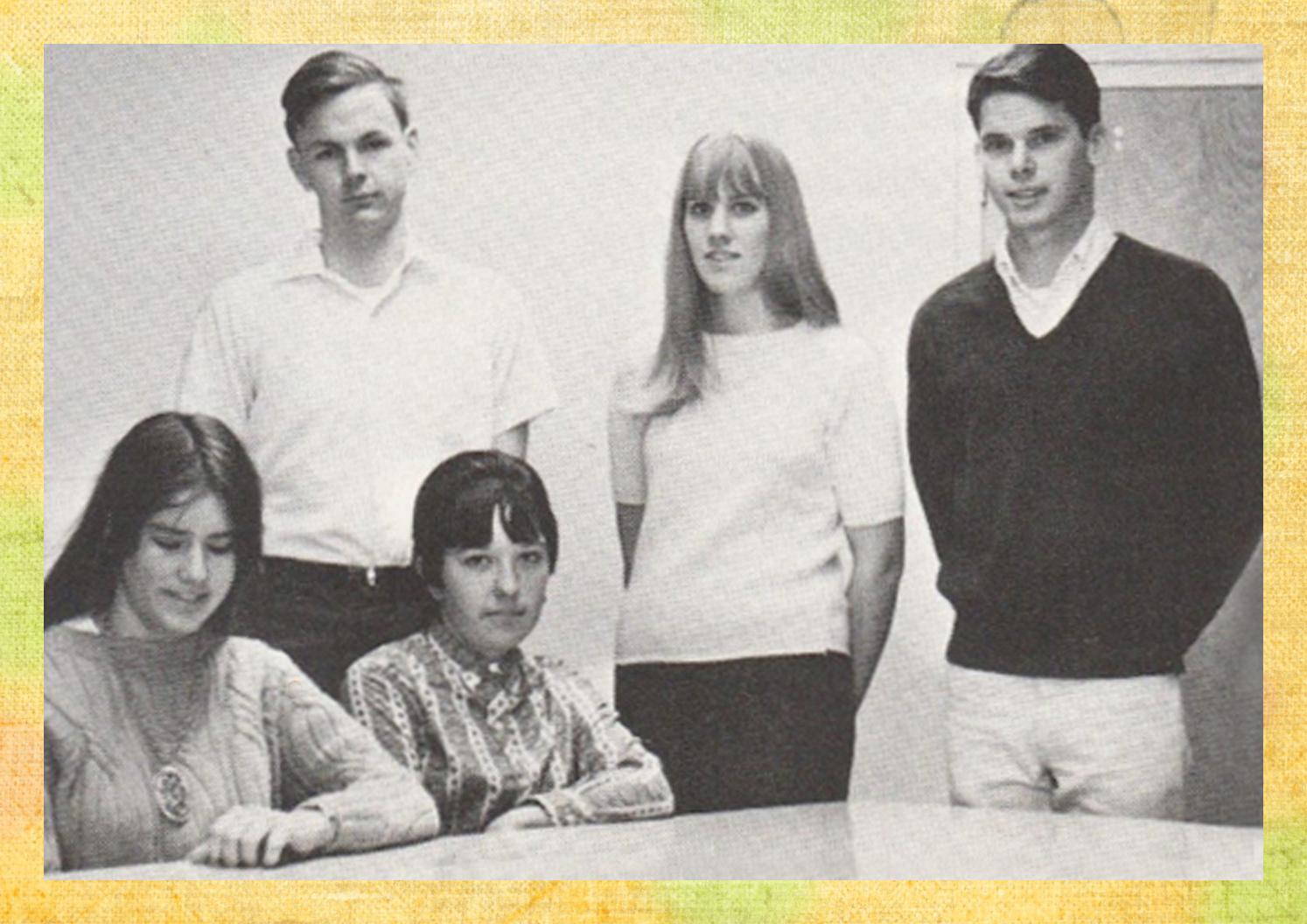
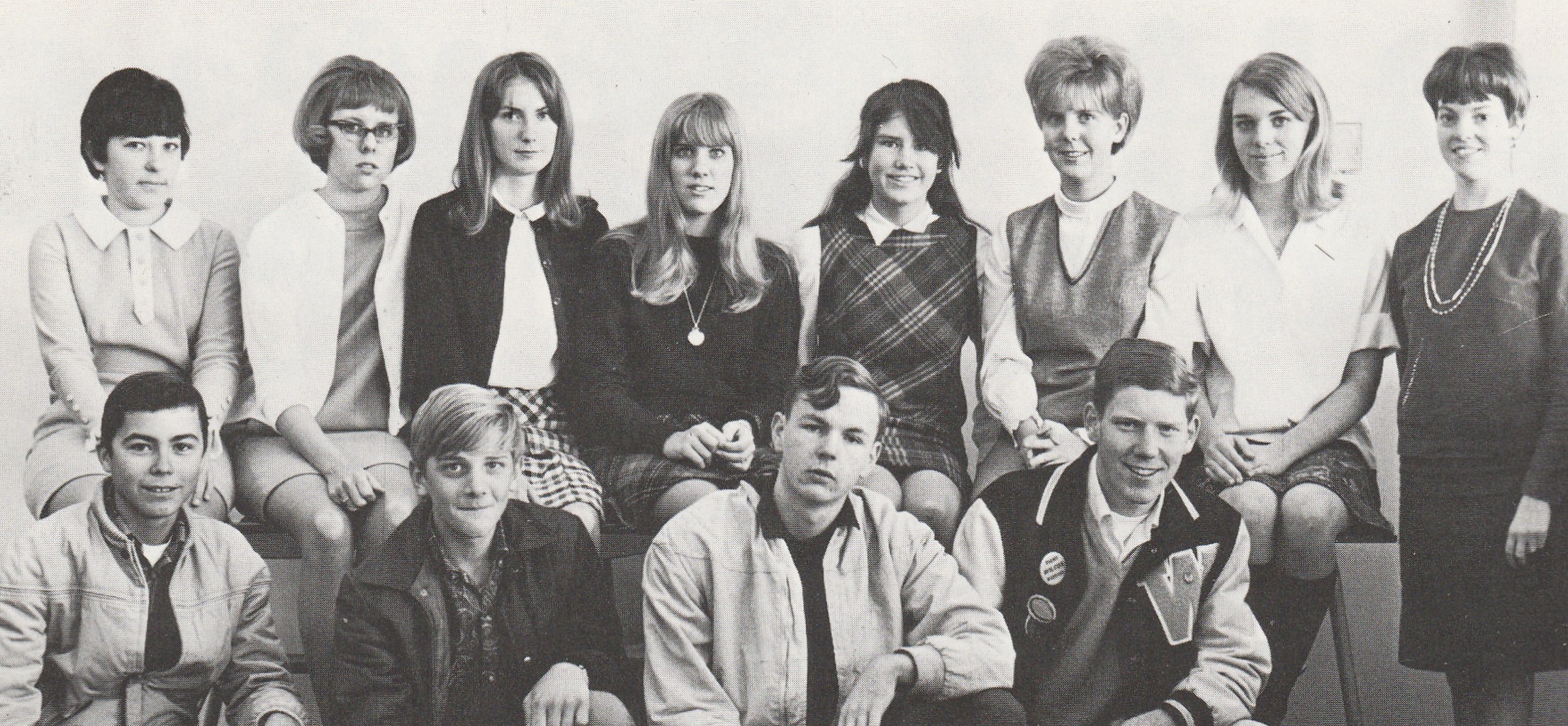
Two of three female students in photo above (Literary Magazine) are named Cathy/Kathy. Cathy Hoover and Kathy Knutsen. Also pictured, Tal Pomeroy, Erin Heinlein and Gail Kaiser
Minor note, but one I couldn’t help but be cognizant of in those days – whenever I mention a girl named Kathy/Cathy, it’s accompanied by a surname. That’s because in every single class in my public school Santa Clara life, there were at least five Kathys – me, Kathy Kerr, Cathy Hoover, Cathy Silva, Kathy Kane, Kathy Scott, Kathy Reid, Kathy Locey, Kathy Kramer or some similar combination. I envied girls with unique names like Krystal Woodward and Joell Funkhauser. Today, while Kathy and Kathleen have fallen below the 500 most popular name mark, Krystal and Joell are on the rise. What’s in a name? Nothing, really, but I would’ve preferred something more distinctive.
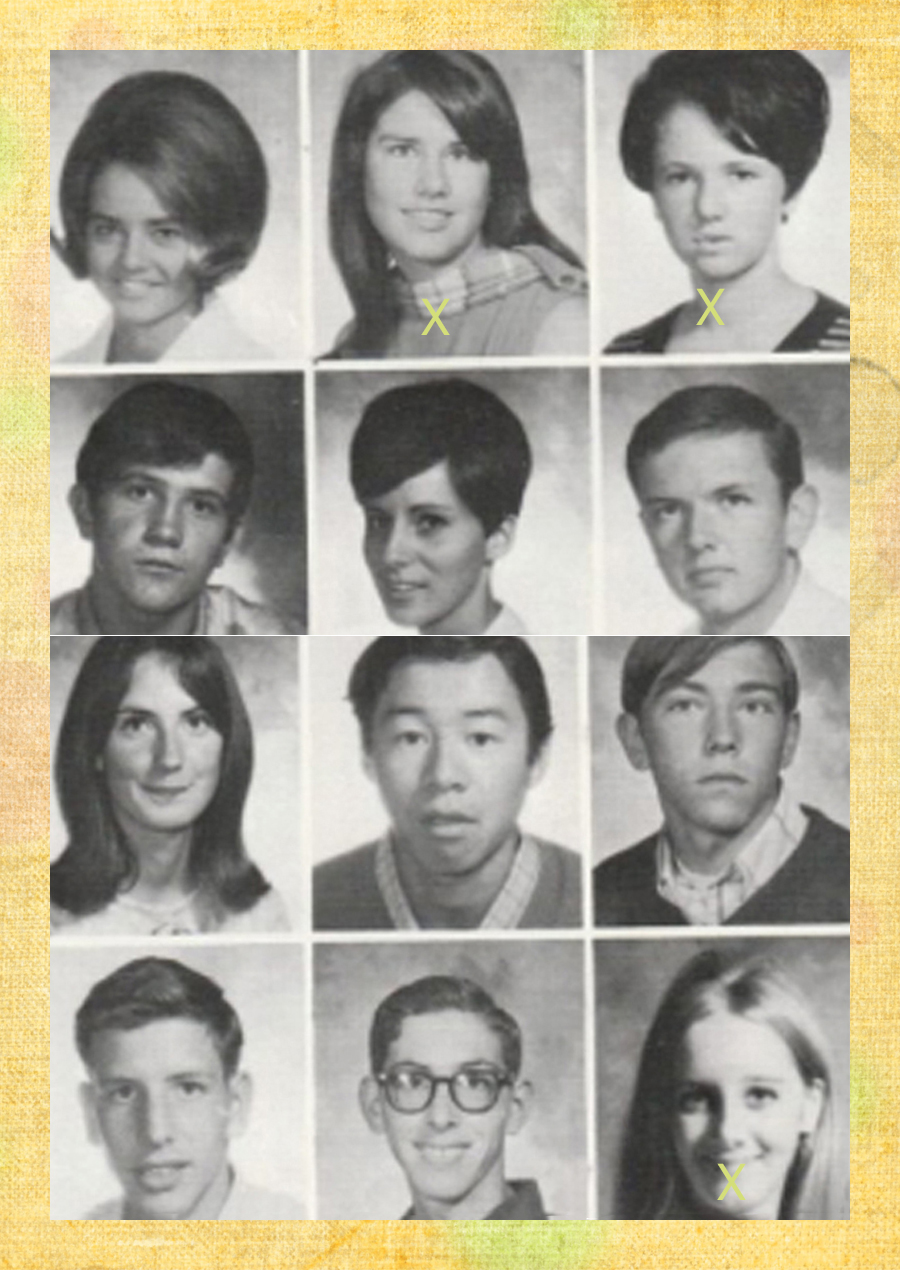
Three of the six female students pictured above, myself included, are named Kathy (Kathleen or Catherine) – Myself, Catherine Kramer and Kathy Locey.
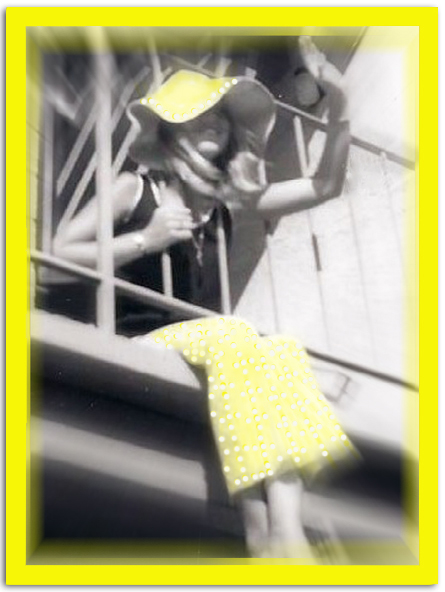
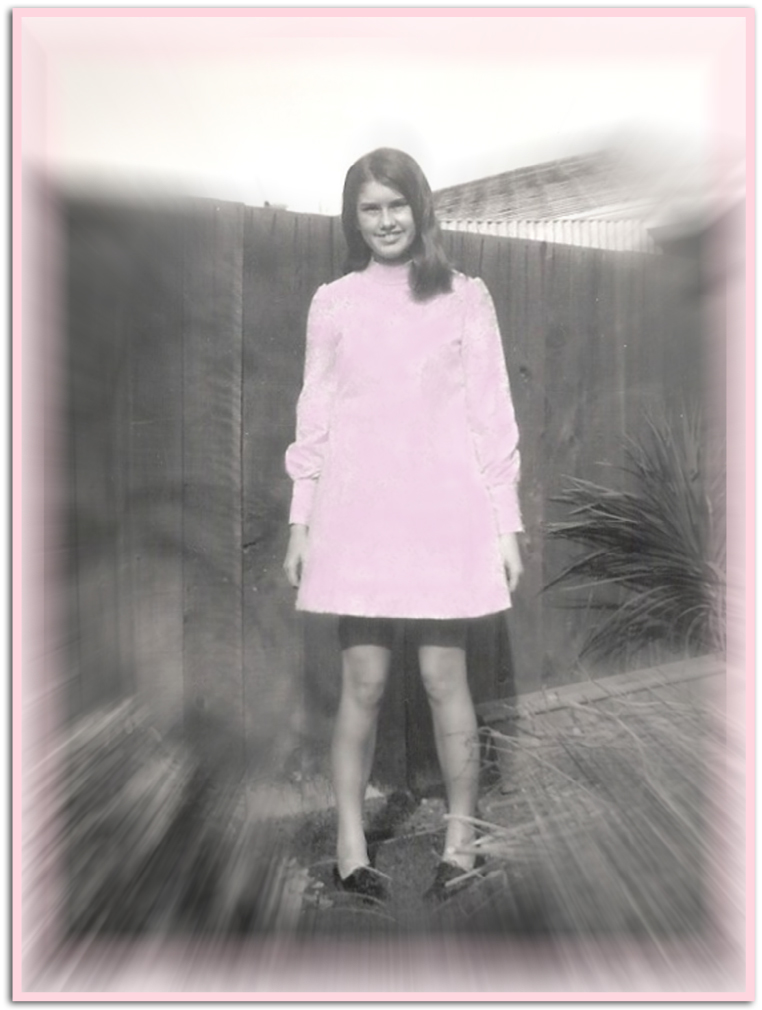
Sandy Walker (Hegwood), on her apartment balcony in her yellow polka-dot bell-bottomsMe in another original hand-made dress – pink paisley or polka dots – in what I thought was a cute pose – on a day I’d be well-advised to duck into a store!
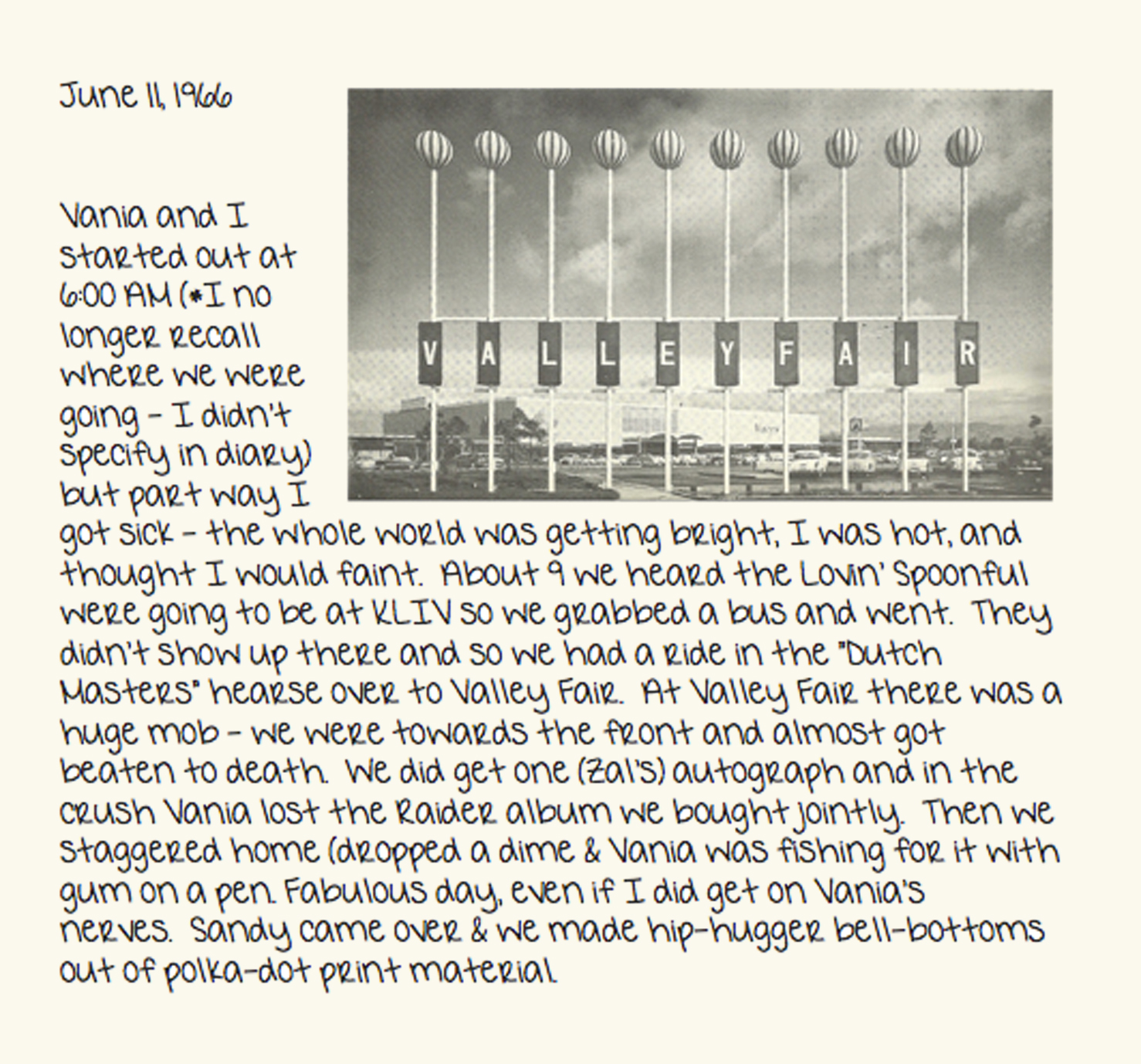
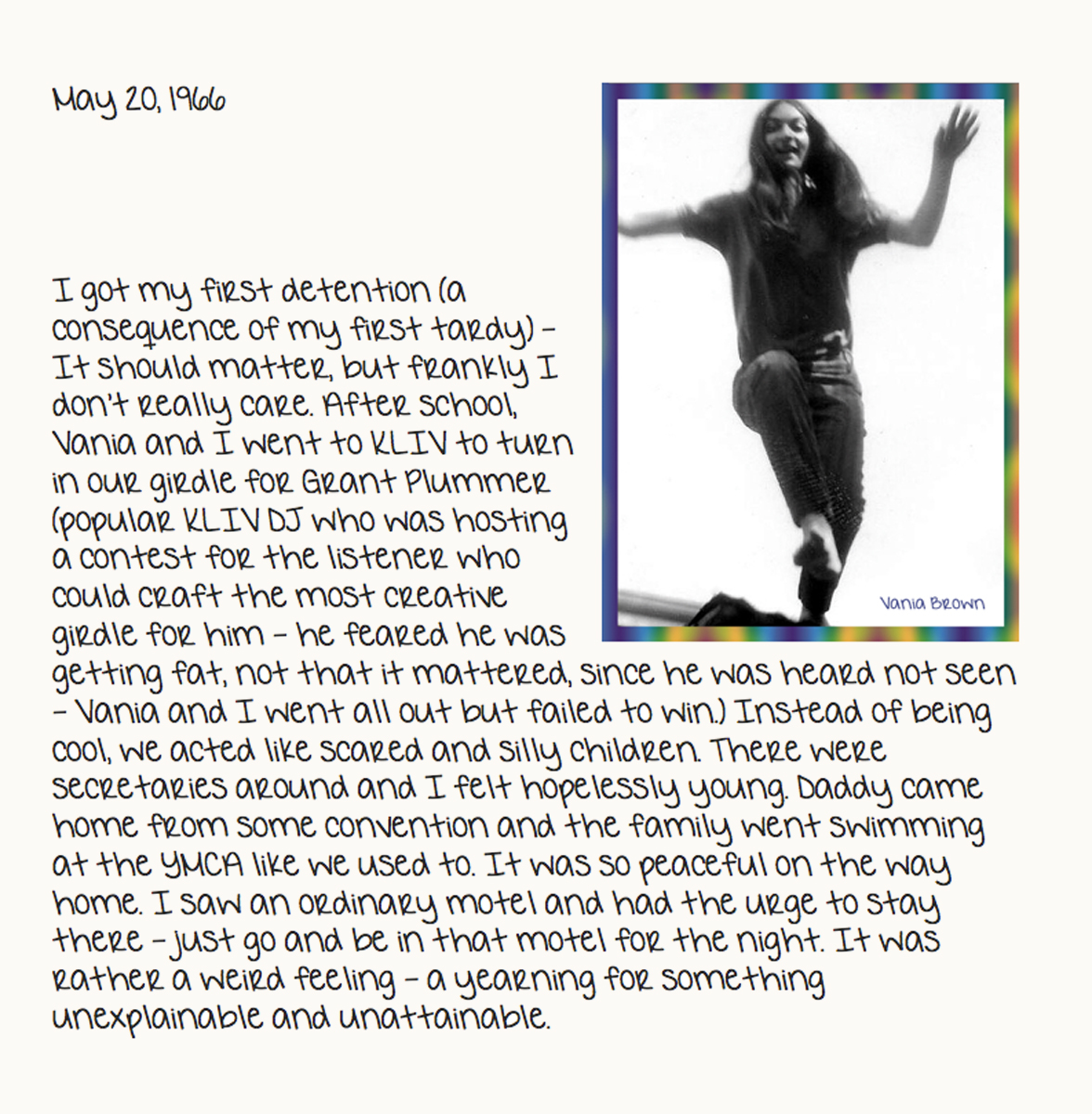
Sandy’s bell-bottoms were yellow with white dots – it’s odd the details that stick in one’s memory. I think mine were pink. I have no recollection of the day the Lovin’ Spoonful descended on Valley Fair but I assume it did in fact happen as I was nothing if not painfully accurate in my somewhat reportorial diaries. I confess to lingering curiosity about what the “Dutch Masters” hearse might be – it sounds kind of cool but knowing me and Vania, fishing for dimes with gum on a pen, maybe not.
In 1966, Valley Fair – an outdoor mall – was the daylight weekend spot to run into people from high school or meet new people from other high schools. More often than not, I ran into someone I didn’t want to see – a guy who’d just broken up with me, for example, with his gorgeous new girlfriend on a day when two new pimples popped out of my nose and my hair looked like a Brillo pad – at which point I’d duck into the nearest store and play hide and seek (some people call it “Stalker” but I think that’s unkind).
I don’t live in Santa Clara anymore so I don’t really know – did Valley Fair survive the 70s, 80s, 90s, and the millennium? Is Macy’s still the anchor store? Does anyone else recall the Lovin’ Spoonful at our very own Valley Fair?
I was fifteen, caught between the tail end of childhood and looming adolescence (becoming boy crazy). Sharing adventures with Vania and other girlfriends would soon give way to pining by the phone waiting for some cruel or clueless guy to call.
I was still deeply attached to my childhood nuclear family, as likely to spend my Friday nights with them as with my friends. It was family swim night at the local Y and for a time the five of us went every week. I can still smell the humid locker rooms and the chlorinated pool; it seemed primal and thrilling to swim after dark.
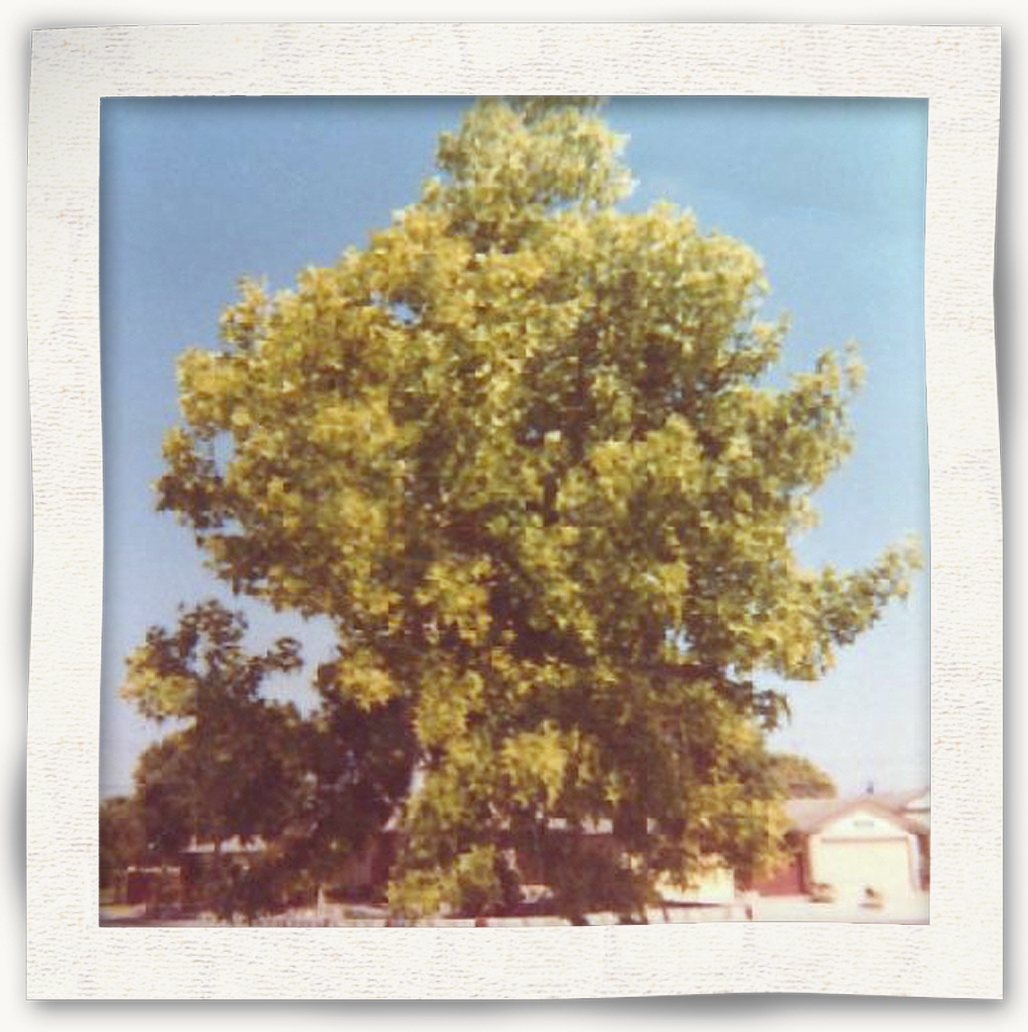
The last two sentences describe a state of mind – or heart – that I called “worldliness’” for lack of a better word. Between the ages of 12 and 16, I physically ached from an overload of emotions I had no way to process. Too much beauty in a sunset or the loneliness of the solitary liquid amber tree outside my window brought me to tears. I miss those tumultuous emotions. That fragile moment on the cusp of adolescence is too brief!
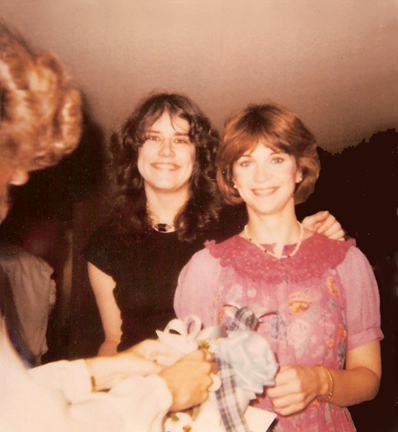
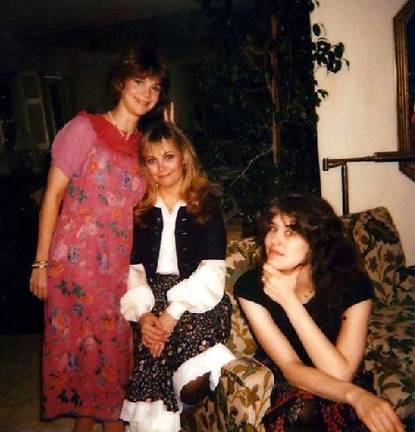
These photos were taken a couple years later – at her baby or wedding shower – but they’re the only ones I can find of us together. It’s surprisingly awkward to ask someone famous to have their picture taken with you, even if you know them – especially if you know them, actually – because you’re supposed to treat them like just another average person. However, when they’re at the peak of their fame and people gawk, it’s hard to ignore the fact you’re hanging out with a star. It’s equally hard not to be aware that you belong on the other side of the red velvet rope, with all the fans and nameless people that don’t get “seen about town” in Variety. I’m not complaining – far from it. It’s exciting to orbit a star. I loved it.
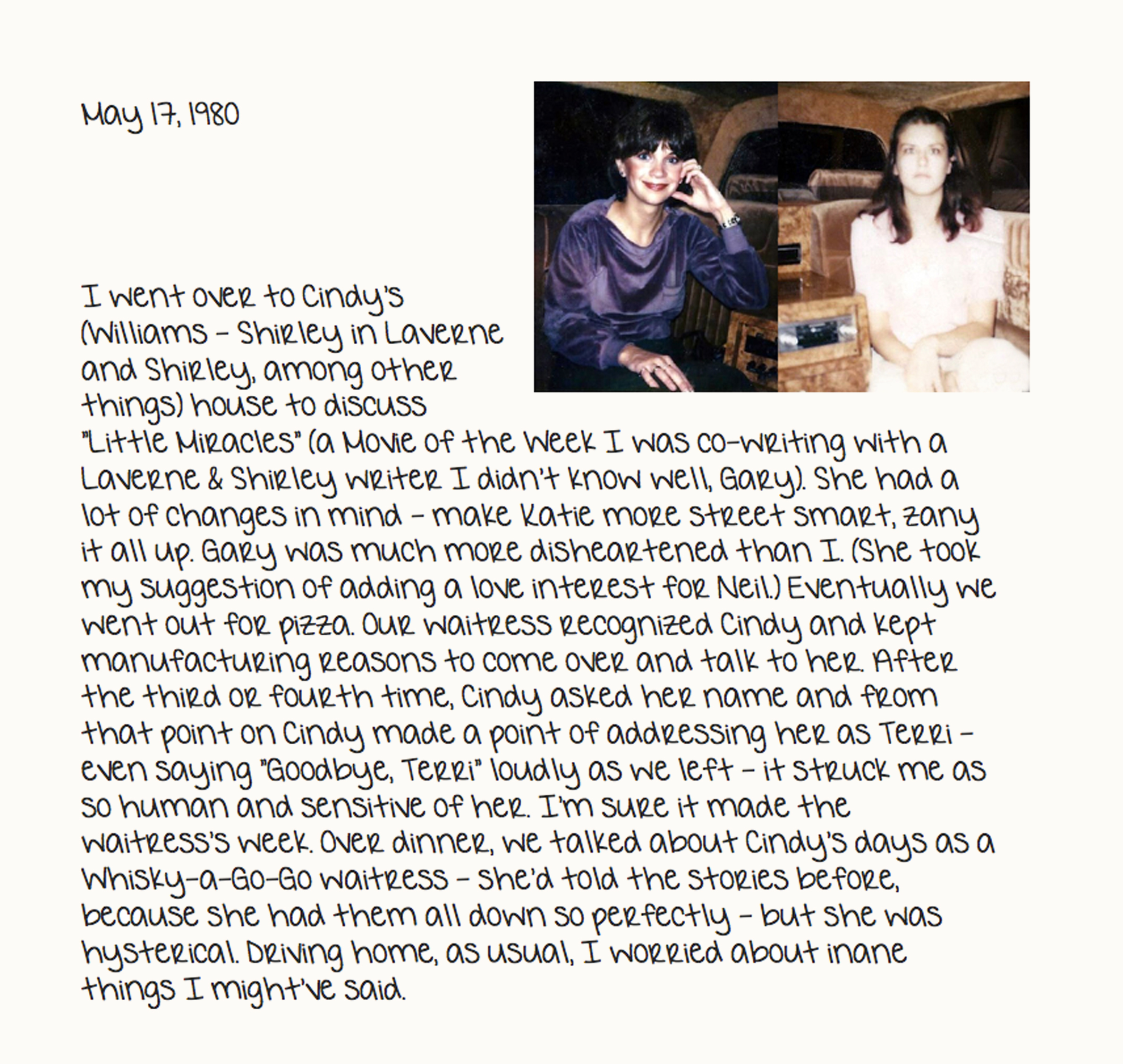
Living in LA, it’s not unusual to see stars going about their daily lives. I ran into Dick Van Dyke at a play and got to tell him how brilliant he was in a TV movie called The Morning After. I passed Arnold Schwarzenegger in a Beverly Hills restaurant. He’s much shorter than you’d think. My most memorable celebrity spotting, though, maybe because it was the first, was eating lunch at a table very close to where Cindy Williams and one of her co-stars from American Graffiti dined. I didn’t interrupt them, ask for an autograph or gape openly – it was enough of a thrill just to spot a celluloid heroine eating like a regular human being. Given this memorable (on my end) early sighting, the working relationship and friendship we developed later felt fated – in a six-degrees-of-separation way. We met because Cindy was looking for a writer. A mutual friend recommended me, for which I am forever grateful.
Don’t bother looking for Little Miracles, the project we met about on May 13, 1980. The network shelved it. Luckily, our friendship survived.
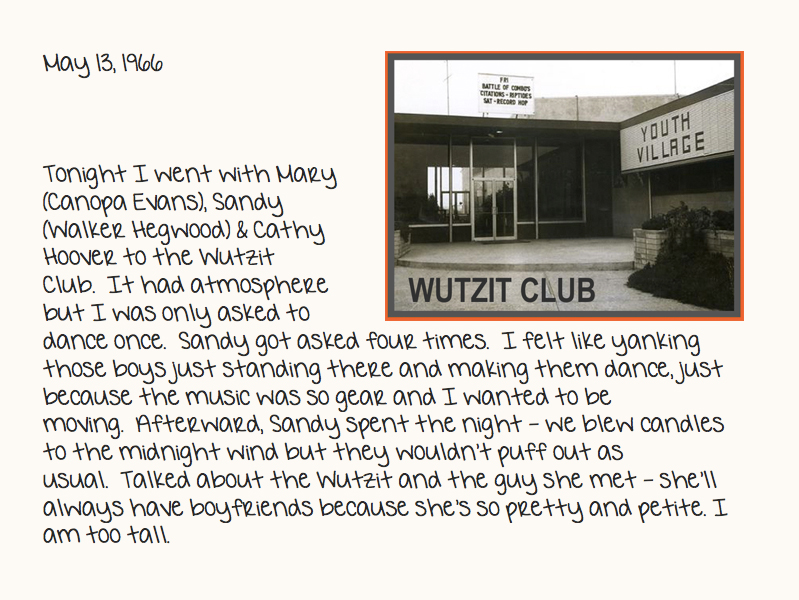
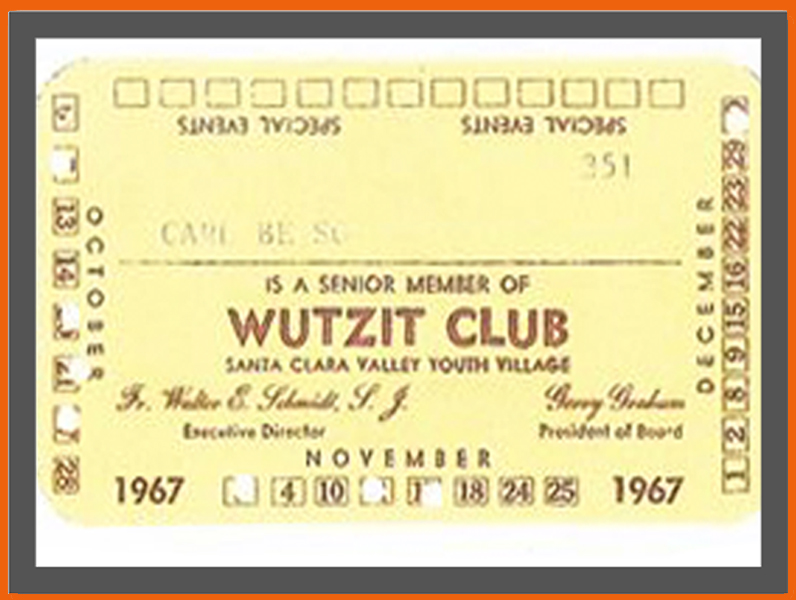
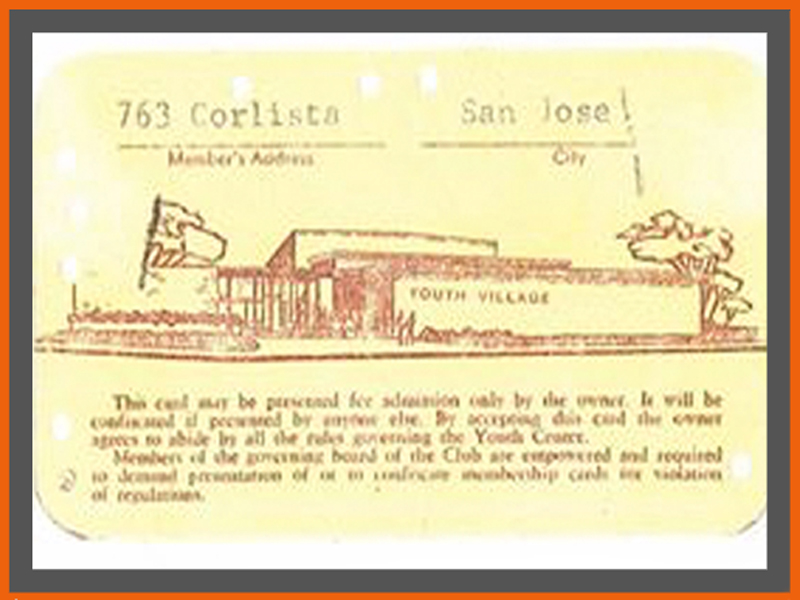
A Catholic priest created the Wutzit Club to keep teen-agers off the streets. In 1966, it was on Newhall Street. It was open Wednesday, Friday and Saturday nights and featured a ballroom, stage, game room, television lounge and snack bar. Dances were strictly chaperoned and a dress code was enforced. No alcohol – and nobody 21 or older – was allowed. Live mostly local bands performed; Buckingham and Nicks played there in ’68, before Stevie Nicks and Lindsay Buckingham joined Fleetwood Mac. Dues (admission) was fifty cents – a small price to pay for the chance to meet the love of your life.
For people like me and my friends, who weren’t part of the Wilcox High “In Crowd,” the Wutzit offered an opportunity to meet non-Wilcox guys who didn’t know we were dorks. Males massed on the right side of the room. Girls milled on the left and waited for some brave boy to cross the great divide and ask us to dance. Our popularity – which in those days meant success – depended on how many times we danced. Higher mathematics were not required in my case since it is hard to miscalculate one (1).
At the Wutzit, beauty got you asked to dance. (I suspect being under 5’9” helped but I can’t prove it.) While it’s true other values – intelligence and persistence – are rewarded in the real world, it’s equally true that real life tends to be easier for those born beautiful.
Today, girls don’t need to wait by the wall. No social stigma attaches if they dance alone or with their friends. I applaud their freedom but can’t help wondering if underlying values changed too. I hope I’m wrong but I suspect more than a few millennials dancing alone still relate to the words Janis Ian wrote in 1975.
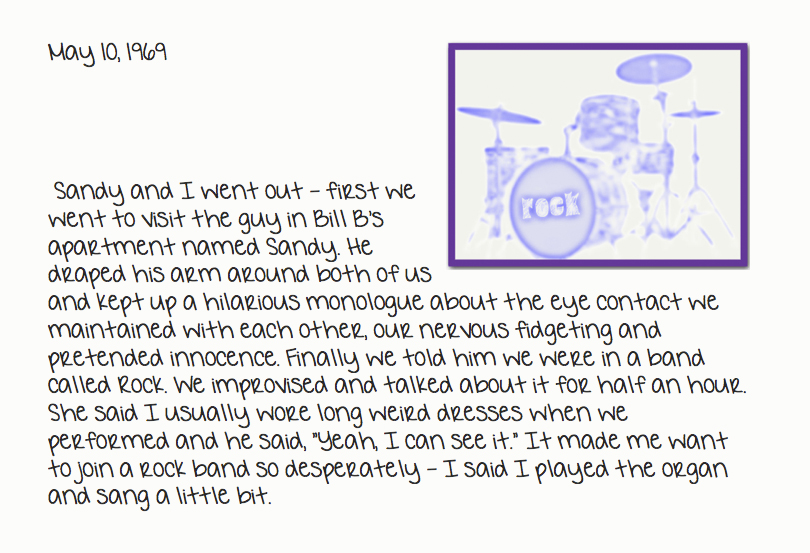
I’m not sure if I’m revealing myself (and – guilting my best friend Sandy Hegwood Walker by association) as a typical high-spirited high-school girl or a pathological liar. In our defense, we didn’t distort the truth for an unfair advantage – we just couldn’t resist any opportunity to try on a new identity. An only child, Sandy’s fantasy life and active imagination meshed perfectly with mine. We were naturals when it came to playing off each other and improvising. We had our own secret language for awhile, but that was kids stuff. When we matured, so to speak, pretending to be aspiring rock stars was one of our favorite gambits. When we really got it going, we could go into elaborate detail about our set list and who sang lead on what song. I’m surprised we never got around to printing up band cards. (But what if somebody wanted to book us?)
This fantasy sounded so cool Sandy and I struggled through a few guitar lessons before we realized our talents were better suited to shopping for dramatic stage costumes, not learning to play an instrument. Years of piano lessons, during which I fell progressively further behind my younger sisters, had alerted me keyboards might not be my forte. My next hint I might be musically challenged came when our church choir director eliminated my half of an upcoming duet with the lame excuse a Natalie Nilsen solo served the music better. I told myself she just didn’t want to show preferential treatment to the pastor’s daughter but I was devastated. While I didn’t want to “toot my own horn,” I didn’t want to hide my light under a bushel either.
I took my case to my father. “I have a beautiful voice, don’t I?” I asked.
He paused and said, “Kathleen, we all have different gifts.”
Even I couldn’t spin this response. So what if I’d never be a real life rock’n’roll icon? Thanks to Sandy’s and my living theater, I knew how it felt to strut the stage and blast away on my Stratocaster. Just to prove that sometimes fantasies do come true, Sandy’s parents bought her a drum kit which she housed in a black light room. It didn’t get much better than that.
If you’re worried about all the gullible people we deceived, rest easy – I don’t think we fooled anyone.
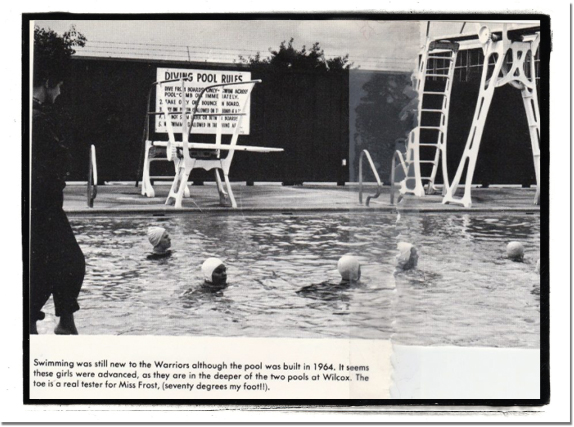
I’m not sure today’s millennials could survive the sixties high school experience. While searching for a photo of the frigid Wilcox High swimming pool, I unearthed an impressive array of “Mermen” shots – but this was the sole illustration of girls in the water. (I’m so disappointed I couldn’t show you the hideous dark green maillots we wore.) In fact, this was the only photo I found depicting girls in any athletic endeavor. Based on my Wilcox yearbooks, athletics and team sports were a “Men Only” preserve – not that my consciousness was high enough to perceive this slight at the time. Until I sought a photo for this blog, I never noticed the omission. Although Friedan’s Feminine Mystique was published in 1963, feminism wasn’t on my radar.
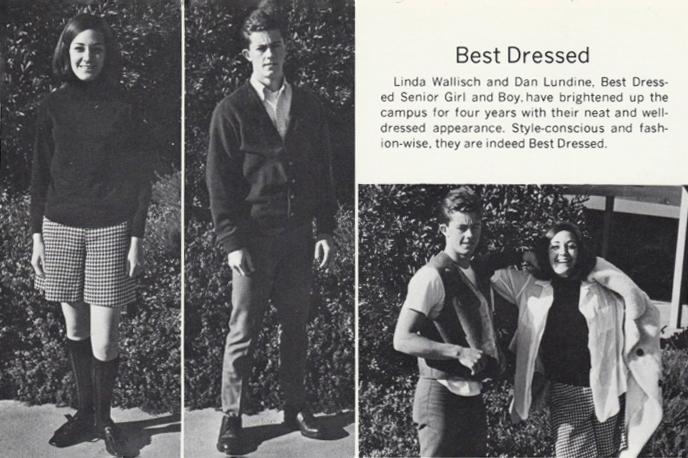
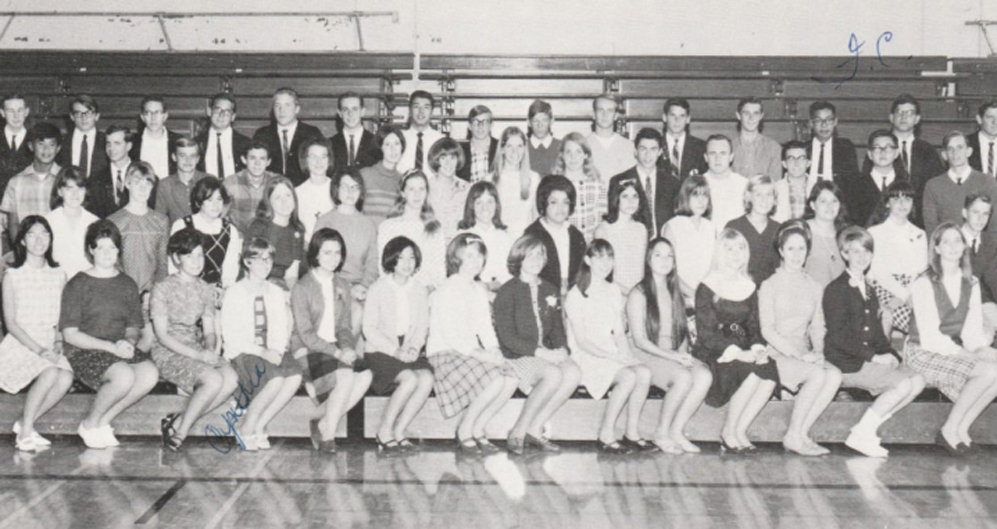
In addition to an outdoor pool in the dead of winter, the class of ’69 was the last to be subjected to a dress code – which meant girls wore dresses every day. If your hem failed to skim the floor when a teacher ordered you to kneel, you were sent home to change. Once a year – on “Grub Day” – girls were allowed to wear pants to school. The top photo of me with the rest of the Literary Magazine staff illustrates typical Wilcox style. For the epitome of high school fashion, see the photo below of the pair my class voted “Best Dressed”.
High school has loomed large in my writing career and I will revisit aspects of my experience in future diary-blogs. If you recognize yourself in a photo, please tag it!
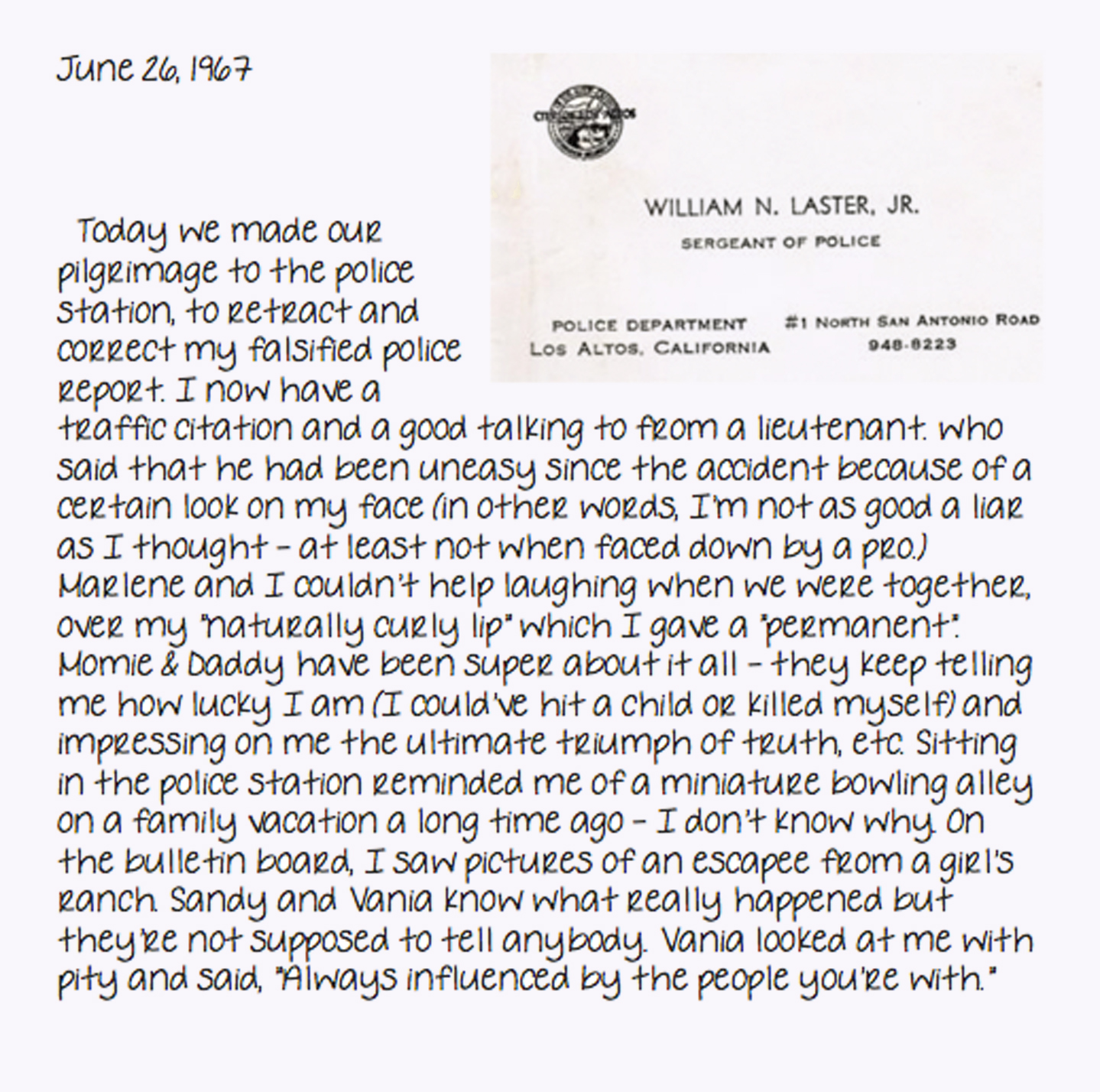 Naturally, I swore my close friends to secrecy which ensured the sordid truth spread quickly. Some people said I was stoned, drunk or dangerously disturbed. Oddly enough, many of them were the same people who used to say I was a dull, goody-two-shoes brain. Was it possible to be both?